

The best ways to keep, share and display family recipes
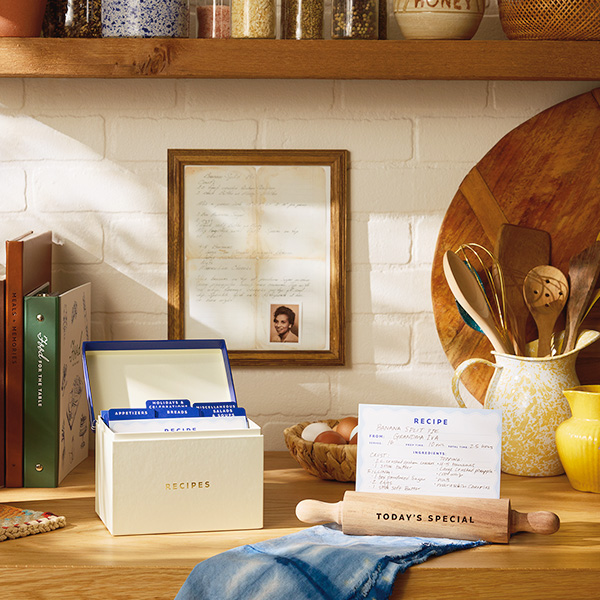
Keeping family recipes in one central location is not only practical organization to save your best meals but also a good way to document family history. As the years pass, it becomes even more important to preserve family recipes to link older relatives to new generations and to carry on unique recipe traditions.
There are many meaningful ways to save family recipes and even display them as art. Ready to get some new ideas on passing down family recipes? We’ve got some delicious tips on capturing food, drink and family recipe memories for those you love. Let’s dig in!
Inspired? Create and share by tagging @HallmarkStores.
What are some simple ways to preserve family recipes?
Collecting recipes can be a fun project that doesn’t have to be complex or boring! With all the options we have today, it’s just a matter of picking one that works best for you.
Things to think about when deciding how to preserve family recipes:
- Where will these recipes live in your home and others’ homes?
- Would you like a physical book to flip through or does it make your life easier to have everything on your laptop?
- Who do you want to include on your journey of keeping family recipes? Knowing the different personalities involved can help you discover what works for you.
Once you’ve thought about these things, you can move on to selecting your recipe-keeping method of choice.
Here are some traditional yet simple ways to preserve family recipes:
- Write down recipes on recipe cards and keep them in a decorative box. This is a classic move. For a holiday twist, store recipes in a festive cookie tin!
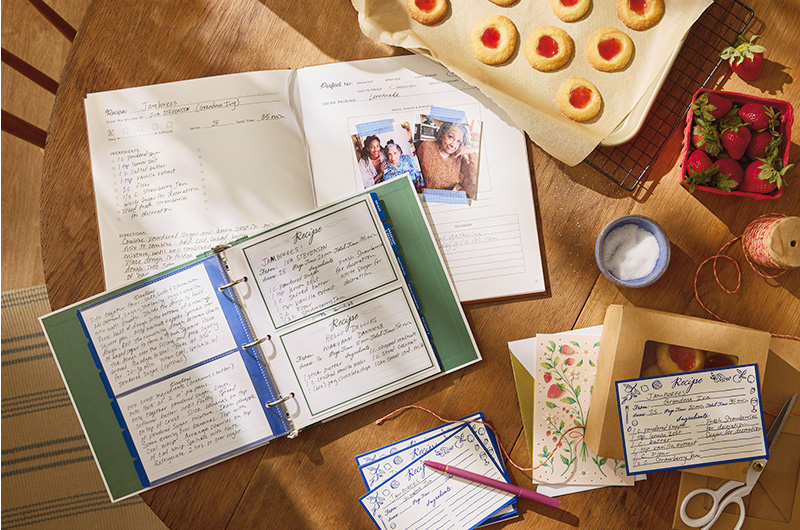
- Handwrite or type up recipes on full-size sheets of paper and keep them in a binder. Maybe you’ve got some old notebook paper hanging around which would be perfect for this.
- Send blank recipe cards out to family and friends to build a list of personal recommendations. Once you’ve collected your recipes, scan or photograph each card, then share a Word doc or pdf with everyone.
- Take a photo of your meal or drink once it’s prepared, then attach it to the recipe in a scrapbook. Bonus: Include old and new photos of family gathered around the table.
- Fill up a recipe binder like this one or this one with your recipe traditions.
- Give a nod to your favorite fandom with a classic recipe box that references a beloved character, movie or show!
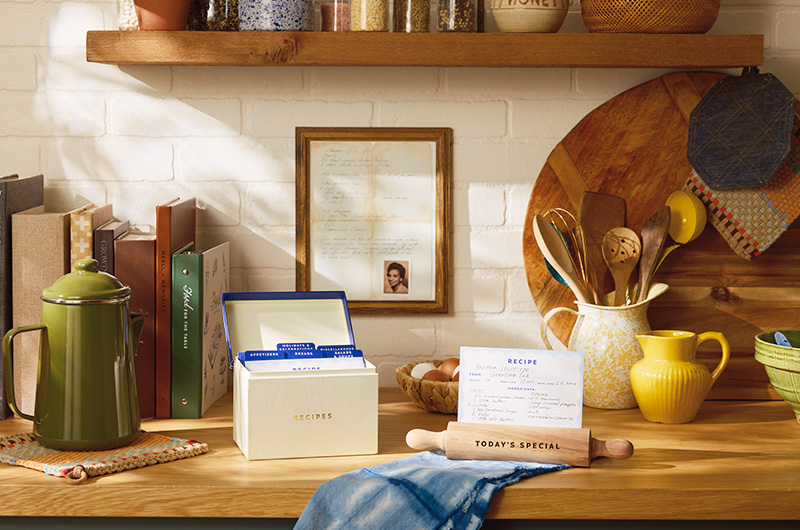
What are some ways to preserve the cook’s handwriting?
Seeing a loved one’s handwriting makes cooking family recipes an even more meaningful experience.
- To future-proof that sacred penmanship, use a copier, scanner or your phone’s camera to capture their words and digitize them. You could also make a sticker of the recipe on your phone and add it to other pics or media.
- There’s also the simple, foolproof route of having old scraps of paper or recipe cards laminated. This will keep them from deteriorating any further than they already have and keep them clean and dry when you use them.
- Another option is to use clear sheet protectors that clip into a three-ring binder or a recipe organizer book. This keeps the original, tactile version while protecting it from spills and other messy cooking practices!
Stephanie Y. recalled how her grandmother’s recipe box contains large numbers of important recipes written on the backs of receipts and old envelopes—as well as even more random bits of scrap paper that her great-grandmother had filled with notes.
“When I moved out of my parents’ house, my mom surprised me with a collection of her favorite recipes, handwritten by her in a blank recipe book,” Cat H. said. “She included all of my faves, and made sure to give me at least a few recipes in every category—mains, desserts, etc. I’m 52 and I still use it! And every time I do, I marvel at her love for me and her sweet handwriting.”
What are some digital ways to pass down family recipes?
- Create a private family website that stores your recipes. Have several trusted members—trusted, as in, they won’t accidentally delete the whole site!—help maintain the pages to ensure your family’s content carries on as new generations emerge.
- Start a private YouTube page with videos made by family members cooking, baking and making cocktails. You could even use it to capture your adventures cooking with your kids.
- Have your parent or grandparent describe a recipe they make, or someone in their family has made, and record it on video.
- Create a shared folder on a file-sharing website like Dropbox where everyone in the family can contribute recipes.
- Add an app like RecipeBox to your phone to collect, organize and save sentimental family recipes and new ones you find online.
- Use the Notes app in your phone to log recipes. Most smartphones let you add links, photos and videos to your notes to make it a multimedia experience. And you can share notes with others!
How do I start organizing and collecting recipes?
Even the act of curating recipe traditions can create new memories with those you love. It can help you reconnect with family you haven’t talked to in a long time.
This can turn into conversations about holiday meals or “that funny thing that a cousin did at the kids’ table that one Thanksgiving.” It might even spark a reason to get together for a mini reunion or dinner out.
- Use a customizable template to design and print your own recipe book. Office supply stores like Staples will print and bind a book for you for a reasonable price.
- Create a beginner-level or “easy” recipe book for a college student or someone just striking out on their own for the first time. It could be “budget friendly”-themed as well.
- Have everyone email their favorite recipe to one email address that everyone can access.
- For more of a “family recipe book,” ask family members to share five favorite recipes, as well as favorite family stories, memories or genealogy notes. You can include the latter in the final book, to sprinkle in across recipe categories. Use special photos for the front and back cover in color or black-and-white. Once it’s all pulled together, have everything photocopied and spiral-bound, one for each family member.
- Host a family potluck where everyone brings a favorite dish as well as enough copies of the recipe for each attendee. Request a specified format, whether 3×5 card, 4×6 card, 8.5×11 sheet or stationery sheet. Give everyone a recipe box, recipe organizer binder or elastic band for all the recipes they’re collecting.
What if I have trouble getting exact ingredients and precise amounts?
Jennifer F. found the difficulty of preserving family recipes during a phone call to her dad when she was trying to duplicate his famous inari sushi rolls for a party. She says their conversation went like this:
DAD: To the rice, add some of those marinated things.
ME: What are they called?
DAD: I don’t know. I think the can is orange.
ME: How much do I add?
DAD: Just some. But not too much.
Uncovering a family recipe can take some work. If it’s not written down, you’ll have to interview someone who knows how to make it. If it is written down but incomplete or illegible, you’ll need to find someone familiar enough with the recipe or the writer to translate. You may even have to swear not to share it outside the family or assume the responsibility of making it for special occasions!
“My grandmother Wese tried dozens of shortbread recipes until she found one that tasted exactly like the one some friends from Scotland brought her,” Trish B. said. “I’m not allowed to share the recipe—but I’m very popular when I share the shortbread.”
What are some creative and meaningful ways to share or display family recipes?
Keeping family recipes isn’t just about eating some good food. It’s also appreciating an art form and those inventive culinary masterpieces you’ve grown up with. This means you can be just as creative about how to save family recipes for those you love.
- Write a song for a simple recipe. Save the recording and teach it to your family members. Kids will love this!
- Frame a recipe, preserving the process and the person’s handwriting.
- Screenprint a recipe on an apron or tea towel.
- Print recipe calendars to share with the family.
- Embroider or print Mom’s recipe on one of her old handkerchiefs or scarves.
- Make a quilt with recipes printed on the various patches.
- Gift a homemade dish to a friend, like cookies, bread or a casserole. Attach your handwritten recipe to a 3×5 index card or in a greeting card as a keepsake for their recipe collection.
- Tuck your recipe into a fridge magnet picture frame.
- Create a bookmark with your recipe written on it.
- Record and edit a video of yourself preparing the recipe and giving instructions how to prepare it. It could be a long-form video, like a Food Network cooking show episode or something shorter like a social media reel.
- Have a favorite cookie recipe printed on a mug that you give to someone with hot cocoa mix.
- Write the recipe in the sand and then take a picture. Or use some other ephemeral nature medium—snow and sticks, if you really want to make a whole day of it!
- Let your recipes live on social media. For example, start an Instagram or Facebook page for your family—or the whole world if you’re really into sharing! Name it “What I’m Making This Week” or “What’s for Dinner” and ask users to contribute recipes they made (or tried for the first time) along with any tips they have.
What are some of the best ways to pass recipes to future generations?
Keeping family recipes for future generations is a way to nourish those you love through both belly and soul. It’s also an opportunity to add to your legacy with comfort food, storytelling, and longtime traditions. Here are some ideas to help you pass your favorite recipes on to younger generations:
- Frame handwritten recipes to hang in the kitchen, especially if they’re ones you use frequently. Display framed pictures of your recipes, too, to make a gallery wall out of it.
- Commission a classy bronze plaque to document your recipe.
- Gift baking or cooking supplies and include a binder of family favorite recipes.
- Have everyone bring a Thanksgiving recipe to Thanksgiving or Friendsgiving dinner. Later, create a printed book or digital shared doc.
- Build a recipe keepsake journal for your child. Every year add one or two of their favorite recipes for that year and give it to them when they move out on their own.
- Start a small garden with your family and grow veggies, fruit and herbs, then create a special dish with it all from scratch—like, “the Smith Family’s Secret Pasta Sauce.” Once you get the recipe right, write it down, along with any info on the specific variety of produce you grew, as well as some advice for your kids once they’re grown. It’ll be something they’re sure to remember as kids, then be touched by you handing down the recipe once they’re adults.
“I have a few recipes that I know by heart (because we make them a little too often)—making sure these are written down is key!” said Cat H.
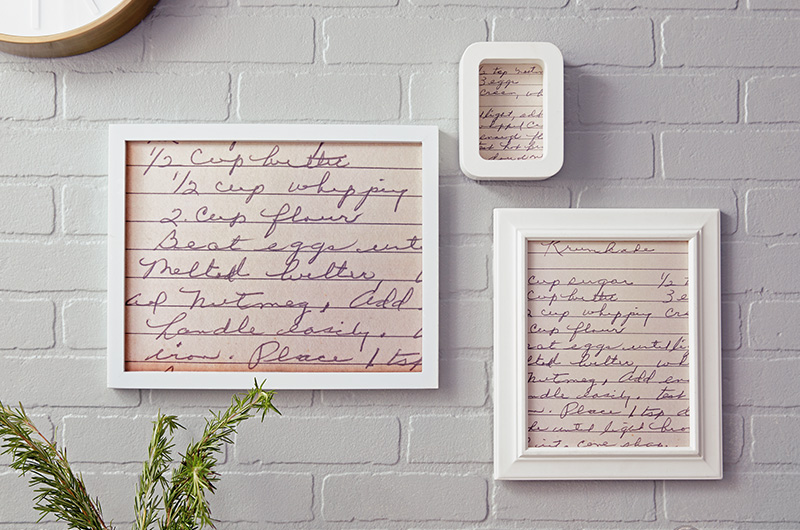
Easy: Recipes as Art
Handwritten recipe cards carry more than a memory of the meal—the cook’s penmanship makes it extra personal. For this gallery wall, choose a variety of frames in the same color and print recipes to fit. If you have a scanner and printer, this one’s easy to do at home. You can also print a photo taken with your phone. Otherwise, head to a print center or office supply store. You can also tweak the color and texture with photo editing software or apps.
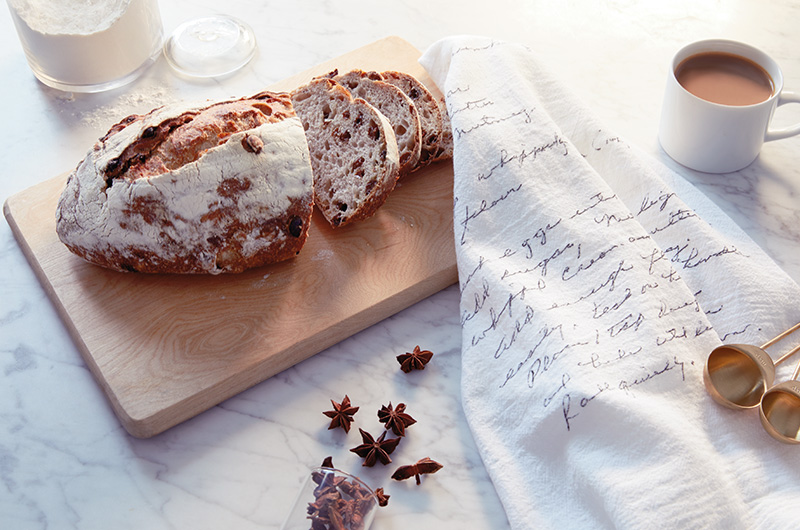
Pretty Easy: DIY Recipe Tea Towels
Just scan in the recipe and print it onto fabric transfer paper. Then follow the instructions to transfer the image to a linen tea towel. Several towels printed with different family recipes and tied with a gingham ribbon would make a wonderful holiday gift.
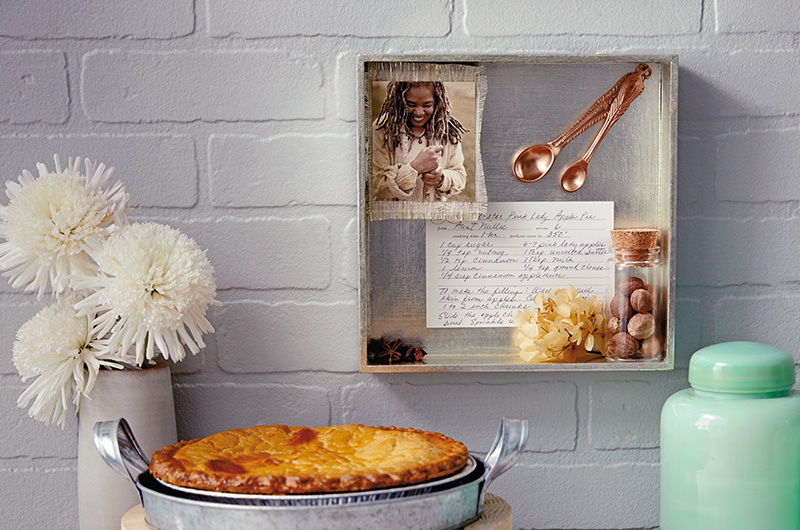
Moderately Easy: Heirloom Shadow Box
Combine recipe cards, photos, and mementos to make a meaningful heirloom shadow box. You can scan and print your recipes or use the original. Hang this one in the kitchen for lasting inspiration.
• Start with a shadow box or tray about 1” deep.
• Gather and arrange the contents: recipe cards, photos, kitchen utensils, even dried herbs or flowers.
• Once you’re happy with the arrangement, attach items to the frame. Use a photo-safe spray adhesive or rubber cement for photos and recipe cards. The rest can be hot-glued or attached with craft adhesive.
We hope these ideas for preserving and displaying your family’s precious recipes have sparked some inspiration—or at the very least an appetite for something delicious and nostalgic.
Want more memory keeping ideas? You could say we have a few of those:
Shop Recipe Keeping
See allYou may also like
See more-

DaySpring When you don’t feel like it’s all good
When I start to worry, these familiar words often come to mind: “And we know that in all things God works for the goo...
-
Christmas Christmas gift wrap ideas to match your holiday personality
If you’re anything like me, the holiday season can make you tap into different sides of yourself. Maybe you become th...
-
Christmas Christmas gift basket ideas for people who can’t wait for Christmas
Whenever I want to show someone a little extra love at the holidays or I’m giving a gift meant for the whole family, ...
-
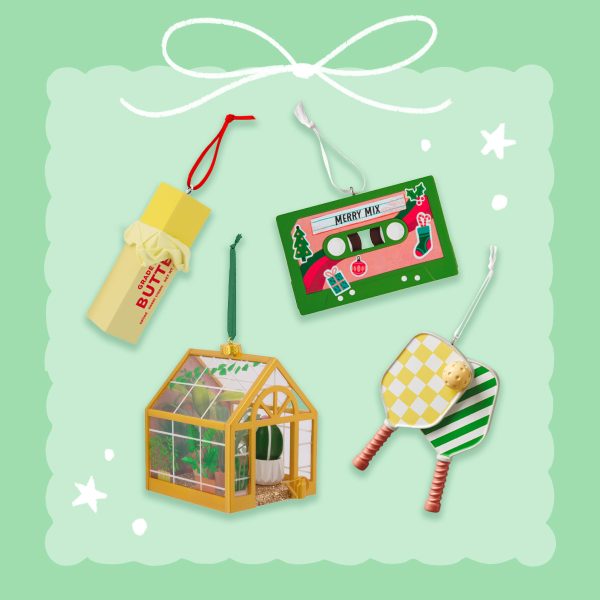
Christmas The best ornament gift ideas for everyone on your list!
Let’s say you’re looking for the perfect gift for someone with a particular interest. Or maybe you want something tha...
-

DaySpring I know You can, but will You?
Several years ago, I stood at the window of our tiny master bathroom, looking out over the yard of the house we had j...
-

Mahogany Welcome the breathtaking work of change within you
There is a village on the banks of the Hudson River, just outside New York City—the city that never sleeps, During th...
-
Christmas Vintage Christmas ideas to turn up the charm this holiday season
When I think of my perfect Christmas, vintage vibes are always what come to mind first. Santa’s sleigh in a dreamy wi...
-
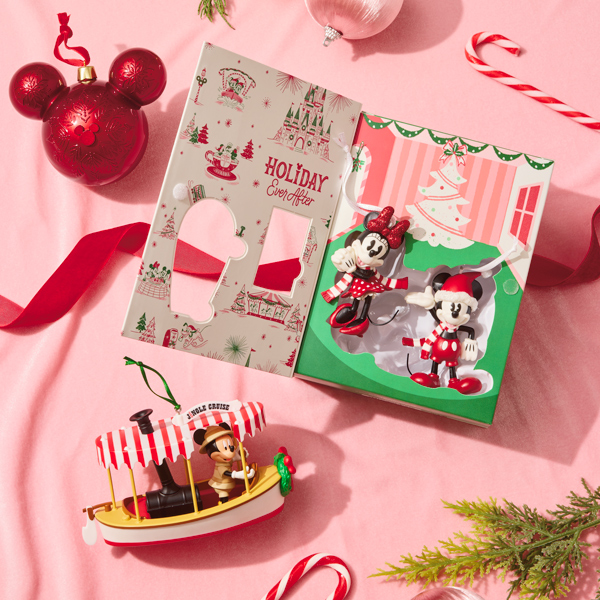
Christmas Make your Christmas merrier with Disney: Explore the Holiday Ever After collection!
We all have that one thing we can’t do without during the holidays. Maybe Christmas doesn’t feel like Christmas witho...
-

Mahogany When rejection stings and it feels like God keeps closing doors
Sis, let me tell you something about how God works. When He is looking out for you, His protection can look a whole l...
-
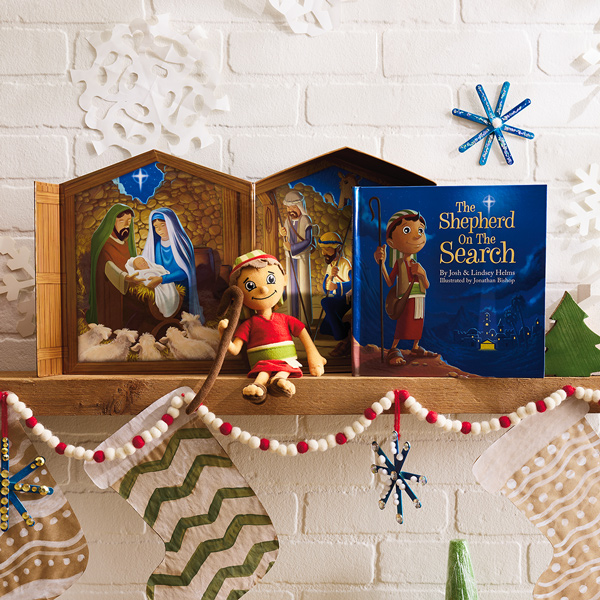
Christmas Why our family loves the Shepherd on the Search: A Christ-centered Christmas tradition
In our home, a variety of Advent activities have passed through over the years. Our Nativity set still has a prominen...
-

DaySpring An unexpected sign of God’s love
For years at my annual check-up, my doctor has urged me to get moving. She was less concerned about what I did, as lo...
-
Christmas Gift ideas to help you share the wonder of Disney this Christmas
There’s no denying it—Disney just hits different at Christmas. The magic, joy and wonder we associate with the holid...
-

Keepsake Ornaments There’s something for everyone at Keepsake Ornament Debut! 😍
Millennial nostalgia? Check. Fandom favorites? Check. Christmas wonder? CHECK. With more than 150 new Keepsake Orname...
-
Wedding Wedding wishes: What to write in a wedding card
Imagine yourself in the parking lot walking in to your friend’s wedding reception—pen in hand, necktie/pantyhose in a...
-

Mahogany Believing bigger, one year at a time
In 2021, I was grieving. My husband had passed, and the holiday season leading up to the anniversary of his death had...
-
Halloween Upgrade Your Halloween movie night traditions with these fun ideas
These days, Halloween is more chock-full of movies than ever before, from cozy and nostalgic to downright spine-chill...
-

Fall ¿Qué es el Mes de la Herencia Hispana?
El Mes de la Herencia Hispana (en inglés: Hispanic Heritage Month), también conocido como el Mes de la Herencia Latin...
-
Mahogany Why fall always feels like a fresh start
One of my favorite childhood rituals happened before the school year even began. Long before the first day of school,...
-

DaySpring If you struggle to accept what is
Statements that come out of my mouth during summer include: “Why can’t I grow magnolias?” “Why don’t we have live...