
How to Set a Table with Style: Simply Casual to Fancy Formal
Knowing how to set a table is one of those life skills we used to have locked down by age 12 or so. But we live in a more casual world now. And we might need a little help when its time to bring out the formal place settings for company or just pretend we don’t have pizza and chicken nuggets so often. We asked Hallmark Content Strategist Trish Berrong to explain casual place settings (proving to her mother she remembers how) and Photo Stylist Andy Newcom for his tips on formal place setting a with style (because…well, you’ll see).
Inspired? Create and share by tagging @hallmarkstores.
How to Set a Table - Casual place setting
By Trish Berrong
If your entertaining style is casual—like, “grab a plate and a drink and sit where you want”—gathering around a table might already feel pretty dang formal. That’s where a relaxed (but still correct, MOM) approach to etiquette comes in handy. A good mnemonic or two is also super-helpful for casual place settings.
But let’s start simple: Get the homework or the mail or the cat off the table and wipe it clean. Find the tablecloth and placemats you got when you had dreams of home-cooked meals and long conversations around the table. (That part’s optional: The casual table does not demand such extravagances.)
Here are the basics for a casual place setting.
Casual Place Setting - Table guide
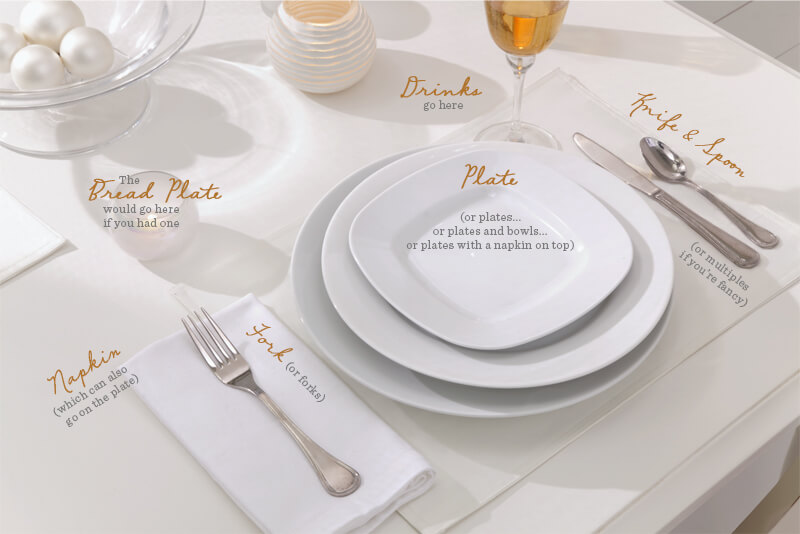
Casual Place Setting - Mnemonic #1: FOrKS
- F is for fork. It goes on the far left with a napkin underneath. (Or you can roll up a cloth napkin in a napkin ring and center it on the plate.)
- O looks like a plate, which goes in the middle. Feel free to stack salad plate or a bowl on top.
- r means “remaining utensils,” and that leads us to…
- Knife, which goes to the right of the plate with the blade facing in, and…
- Spoon (or spoons).
Casual Place Setting - Mnemonic #2: b and d
Touch your thumbs to your middle fingers and point at the table, so your hands look like a lower-case b and d.
- b means “bread and butter”—if you provide a cute little plate for carbs, it goes to the left of the fork.
- d means “drinks”—they go above and to the right of the knife and spoon.
It can be that simple and easy. But when you want to go all out…
How to Set a Table - Formal place setting
By Andy Newcom
The secret is to understand formal table setting etiquette and then bravely break the rules to make the table your own.
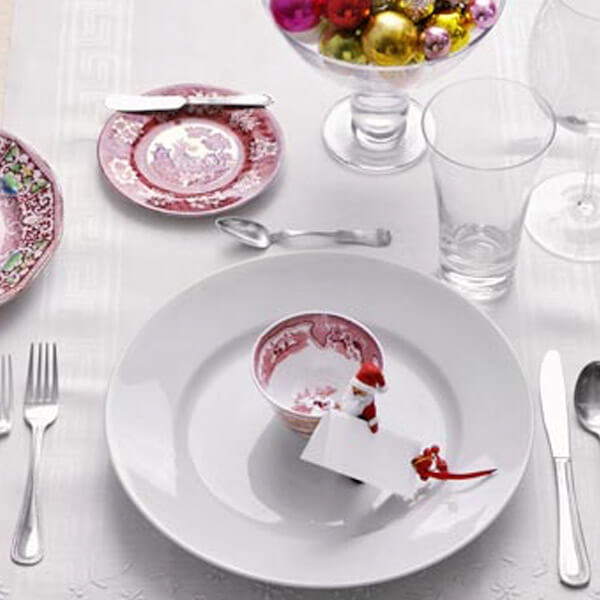
Start simple: snowy white tablecloths and napkins are classic. I like contrast, so I mix nostalgic plates and dishes with a modern serving dish or platter. In my book, there’s no such thing as excess, so crowd that table with as many pretty things as will fit: Fill compotes with decorations and set out glasses for Champagne, red and white wine, and water. (I figure that if you use every piece of silver and crystal you have, people will assume your food is fabulous!) Stay away from stinky candles—nothing on the table should smell except the food!
The most important rule: Remember that the goal is to bring loved ones together and feed them with food, stories and laughter. You’ll be a great success—whether or not you have a fish fork!
Formal place setting - Table guide
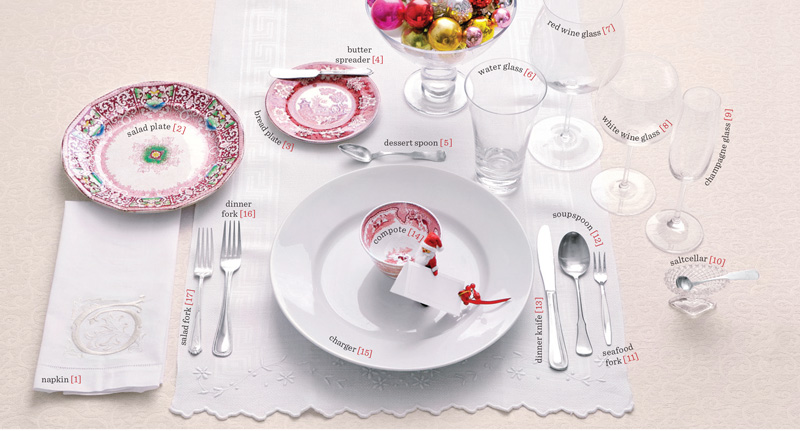
1. Napkin – When an appetizer is on the table before guests are seated, place the napkin to the left of the forks. Otherwise, center it on the chargers.
2. Salad plate – These plates go above and to the left of the salad fork unless your family eats salad after the entrée—in which case, put them out after dinner.
3. Bread plate – Slightly smaller than the salad plate, this sits above and to the left of the charger. Use extras as dessert plates or saucers.
4. Butter spreader – Guests use their own spreaders to smooth butter on bread—while a butter knife with its pointed tip is used to slice butter from the communal serving dish. Spreaders go on the bread plate, blade down and to the left.
5. Dessert spoon – The same shape as a teaspoon, though slightly larger, this utensil rests above the dinner plate.
6. Water glass – Since water is consumed throughout the meal, it’s served in the largest glass or goblet on the table. We used a casual bistro glass.
7. Red wine glass – Because red wine has big flavors and aromas that need room to expand, this glass is larger than a white wine glass. Red wine is traditionally served with the entrée, so place the glass closest to the table’s center.
8. White wine glass – The sides of this glass are straighter than those of a red wine glass to concentrate the delicate flavor, which is also why this glass is smaller. White wine is often served with lighter dishes, such as fish. The glass goes second in from the right.
9. Champagne glass – “Tulip” (above) is the Champagne glass shape experts prefer. Since Champagne is often enjoyed before wine, place the glass on the far right.
10. Saltcellar – In medieval times, salt was so valuable that it was locked in the cellar after meals. Today, formal dinners include saltcellars placed at each diner’s far right, with a small spoon for sprinkling.
11. Seafood fork – This small, three-pronged fork is meant for eating seafood, such as shrimp cocktail, and should be placed to the right of the soupspoon. It can be used to spear condiments, such as olives or lemon slices.
12. Soupspoon – Similar in shape to a tablespoon, this is used for eating chunky soups, such as minestrone or stew, and goes on the right of the outermost knife.
13. Dinner knife – The longest knife in a flatware set, this should be at every place setting except when soup is the main course. It goes directly to the right of the charger.
14. Compote – This type of footed bowl was popular in 16thcentury Italy and was often used as a candy dish. Small compotes can be used to serve an appetizer or dessert; we chose a small teacup instead.
15. Charger – Meant as a base for the appetizer plate at formal meals, a charger should already be on the table before guests are seated. Then you clear it and replace it with the salad or dinner plate before serving the next course. In less formal situations, you can use a charger as a dinner plate or vice versa.
16. Dinner fork – Originally called a “table fork,” this utensil goes directly to the left of the dinner plate because it is the final fork used during the main meal.
17. Salad fork – The fork originally had claw-shaped tines, the better to spear lettuce. Today it’s broader than the average dinner fork. Place it to the left of the dinner fork since it will be used first (unless, in the European style, you enjoy salad after the entrée—then it should go closest to the plate).
Formal place setting - Table manners
Whether you’re eating with friends, family, or business connections, good table manners will make the meal a nicer one. And even if it’s just you and the cat*, it doesn’t hurt to practice.
- If you’re serving yourselves, pass dishes of food to the right.
- Wait until everyone has been served to start eating.
- When someone asks for the salt or pepper, pass them together.
- Don’t reach for food—ask the person nearest what you want to pass it.
- Instead of buttering a whole slice of bread, break off a bite-sized piece and butter it from a pat you’ve put on your plate.
- Keep your elbows off the table while you’re eating.
- Chew with your mouth closed, and don’t talk with food in your mouth.
- Your napkin goes in your lap until the meal is finished. When the hostess puts her napkin back on the table, leave yours folded on the left side of your plate.
- Speaking of your napkin: Don’t blow your nose in it. And don’t hide food in it.
- When you’re finished, place your silverware diagonally on your plate, with tops pointing up and to the left.
- Not sure what to do? Take your cue from the host or hostess.
*Not all tips will apply to meals with cats.
Ready to set your own picture-perfect holiday table—but can’t tell a salad fork from a seafood fork (let alone put the bread plate in the right spot)? Download Andy’s step-by-step table setting guide and you’ll be set to impress your guests.
Shop Thanksgiving
See allYou may also like
See more-

DaySpring An Easter prayer
As we reflect on the Resurrection of Jesus, take some time to praise Him and ask for even more of His Presence in our...
-

Mahogany How to step into spring with intentional joy
Spring has always been my favorite time of year. It feels like stepping into joy. Like the world is gently reminding ...
-
Baby 80+ thoughtful baby shower ideas you’ll love
There are few things more exciting than finding out a friend or family member is expecting a baby—or going to be a ne...
-

Graduation 100+ majorly meaningful college graduation gift ideas
Choosing the best college graduation gifts for the grads in your life can feel a little overwhelming. There are so ma...
-

DaySpring He is the God who sees and loves you
If we could get together, I would tell you that no matter your decision or how you move from this moment, that I am h...
-

Mahogany Happy Women’s History Month to all the real ones who hold it down
Happy Women’s History Month to all the real ones who hold it down. The women who show up, speak up and do not fold ju...
-
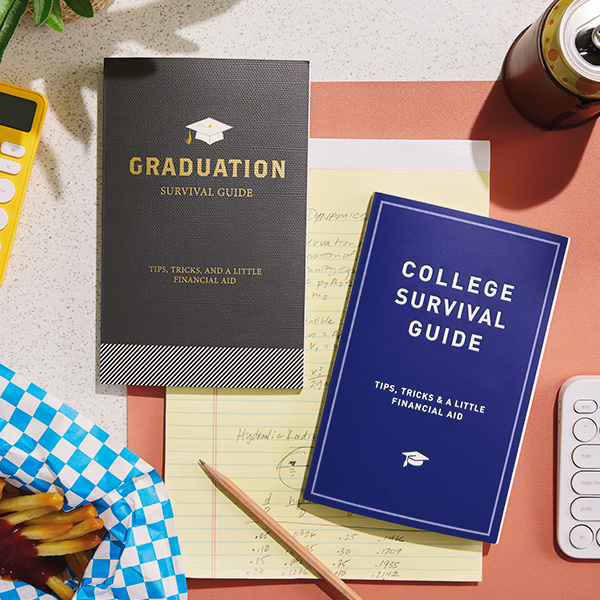
Graduation The College Survival Guide and the Graduation Survival Guide: Make the perfect graduation gift even better
The College Survival Guide and the Graduation Survival Guide were created to turn the most-requested high school grad...
-

Mother's Day 60+ first Mother’s Day ideas to give Mom her moment
As a mom, I can tell you that there’s nothing like celebrating Mother’s Day for the first time. My child was finally ...
-

DaySpring Eight influential Christian women throughout history
March is Women’s History Month, so we’re taking a look at some influential Christian women throughout history and the...
-

DaySpring Some things are worth the wait
I don’t know what you have been waiting for, but if it comes from Him, it is going to be good. It is going to be wort...
-

Mahogany Strength doesn’t always roar...sometimes it whispers
I was sitting in the chemo chair the day my doctor told me the treatment was no longer working. The room felt colder ...
-
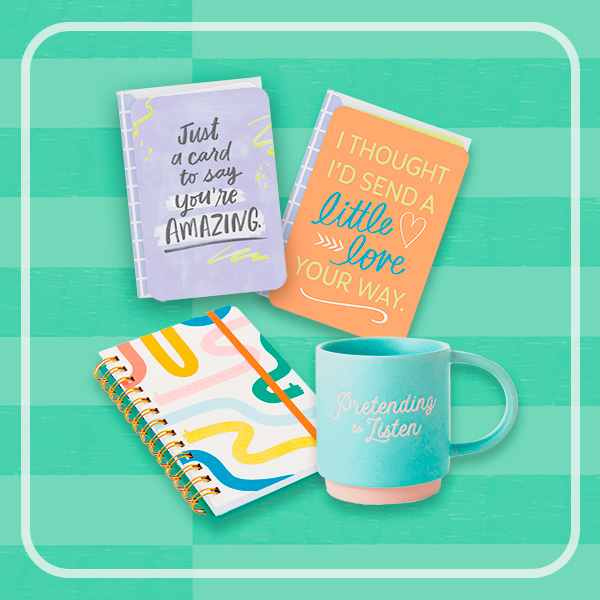
Gifting 85+ “just because” gift ideas to show you care
Sharing a gift is a wonderful way to let someone know that they’re appreciated and cared for. With so many reasons to...
-

Mother's Day What is Mexican Mother’s Day: A look at a heartwarming celebration of motherhood in Mexico
At Hallmark, we believe mothers deserve love and recognition in every country (and in every language). In Mexico, mam...
-
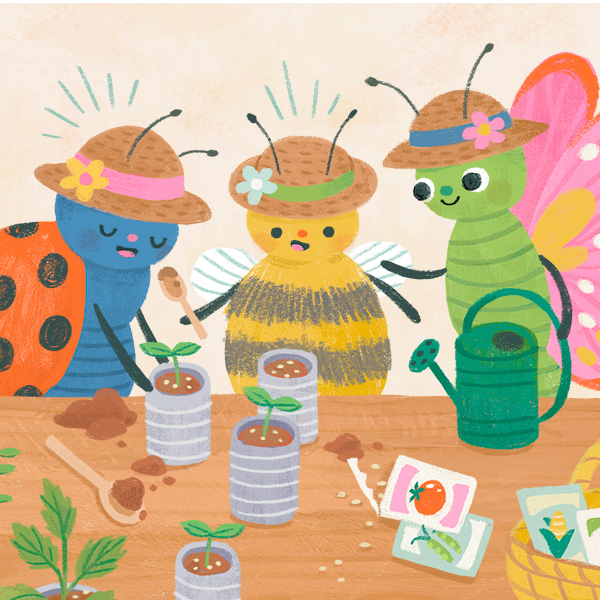
Spring Small garden ideas: 25+ creative ways to make the most of a tiny outdoor space
Spring is hereeeee! 😍 And if you’ve been out and about, chances are you’ve seen more than a few reminders that spring...
-
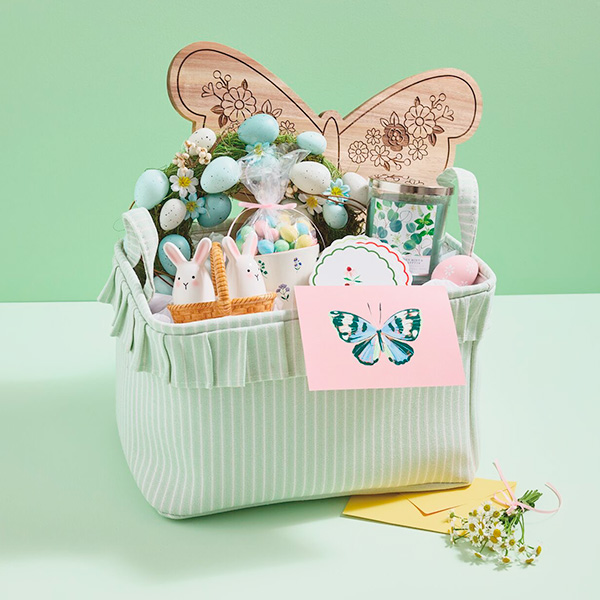
Easter 70+ festive Easter basket ideas for adults—because grown-ups need fun, too!
With its fresh vibes and warming weather, spring is easy to love. And if you’re looking for a way to bring even more ...
-

DaySpring The hidden fruit of a frozen season
I believe there is an invitation from God to bear fruit…even in winter. Your winter season, whether literal weather o...
-

Mahogany How to navigate change with your friends
There is a level of uncertainty that comes with change, even wanted change. I have spent years writing about marriage...
-
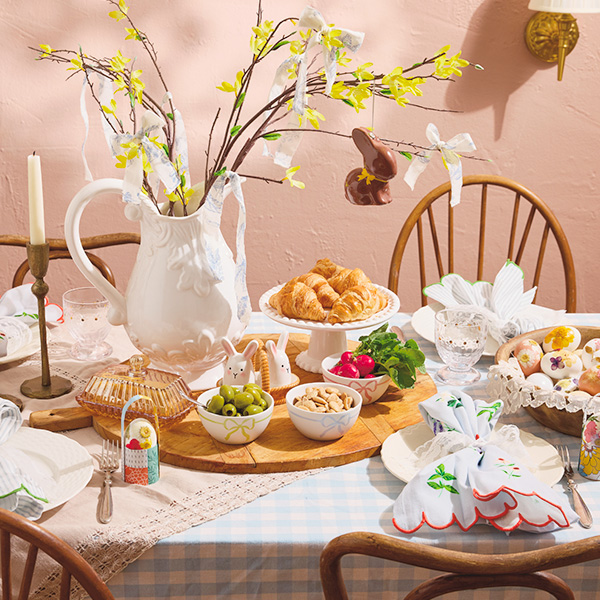
Easter 50+ vintage Easter decor ideas to bring the charm this spring
Decorating for Easter can put a little spring in your step, especially if there’s vintage Easter decor involved! If y...
-
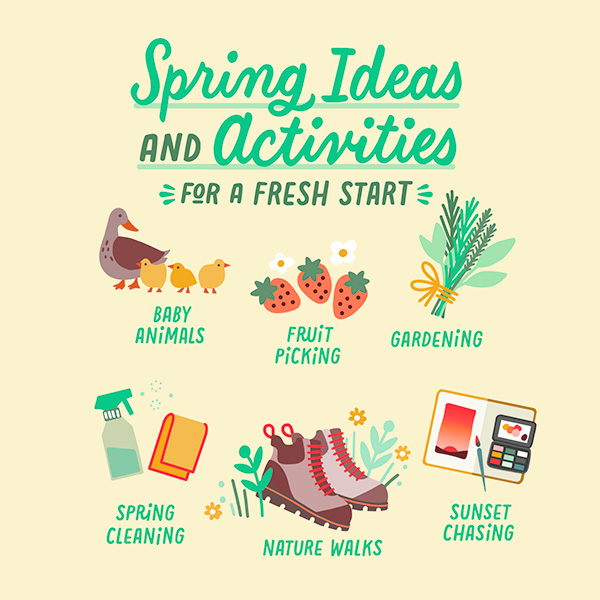
Spring Lean into the season: 35 spring ideas and activities for a fresh start
We know it’s a cliché to say that spring is the season of hope and new beginnings and whatever, but clichés are clich...
-

DaySpring Meet the DaySpring contributors
The DaySpring Writing Community is where women of different ages, life stages, cultural backgrounds and church tradit...